Why dinner breaks on a GLP-1
Dinner is where GLP-1 eating goes wrong most often, for a simple reason: by evening you have very little appetite budget left, and the foods that used to structure a dinner, big portions, rich sauces, heavy carbs, are exactly the ones the medication turns off. So dinner shrinks to a few crackers, or gets skipped, and the day quietly ends short on the one macronutrient doing the most work for you.
That matters because in rapid weight loss a meaningful share of what goes is lean mass, and muscle is what defends your result long after the prescription ends. Appetite dropped. Protein needs did not. The whole game at dinner is spending a small appetite where it counts.
The plate rule
Every dinner below is the same sentence wearing different clothes:
- Protein anchor first. 25 to 40g: fish, chicken, eggs, cottage cheese, beans. If you only finish half the plate, this is the half.
- Fiber volume second. Roasted vegetables, greens, lentils. Volume and fiber trip stretch receptors, the fullness signal that works with or without medication.
- Small enough to finish. A completed small plate beats an abandoned large one, and the psychology matters as much as the nutrition: finishing feels like winning.
If you are tapering or past your last dose: this rule is the core of maintenance eating. As the medication clears, chemical fullness fades; the fiber-volume half of the plate is what replaces it. More on the full transition in how to not gain the weight back.
The 7 dinners
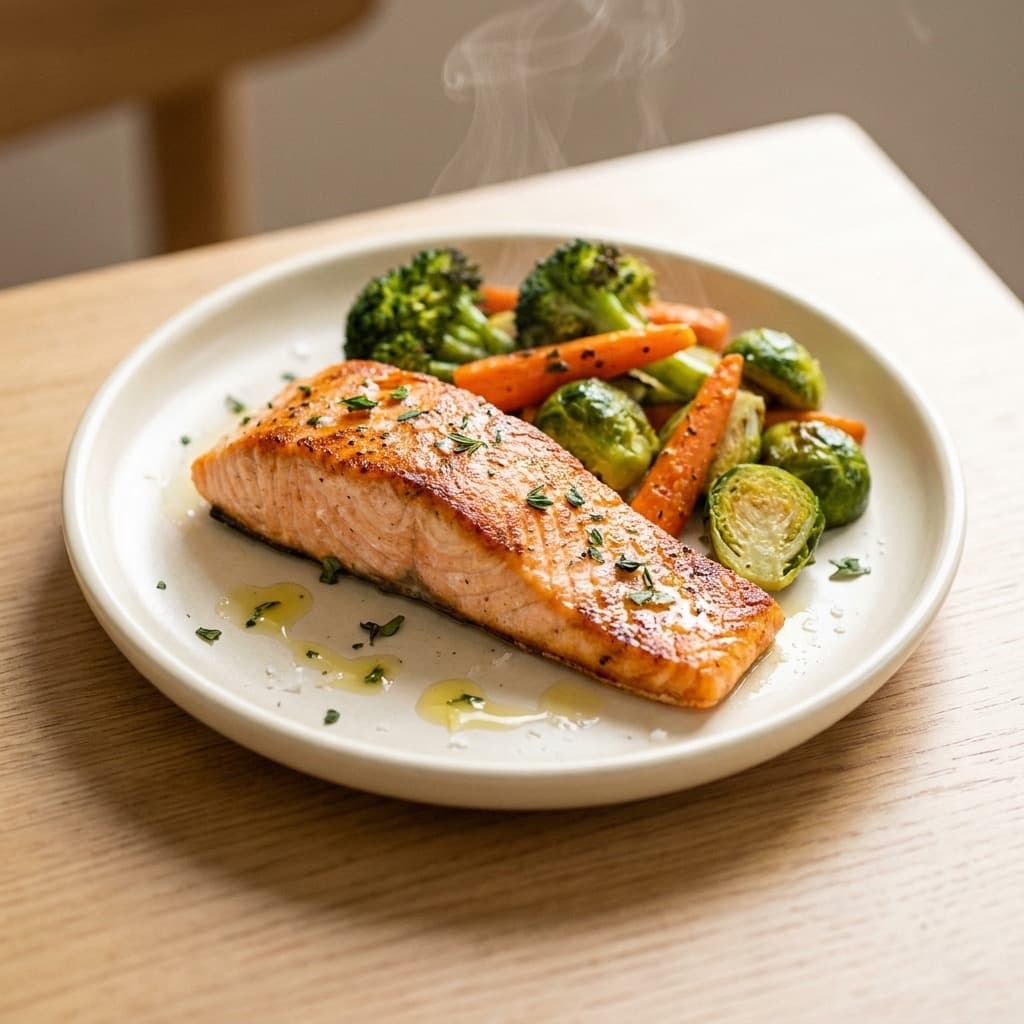
Sheet-pan salmon with roasted vegetables
~34g proteinOne pan, no decisions, and salmon is rich enough that a small portion feels like a real dinner instead of a compromise. The fish is the protein anchor; a full tray of broccoli, carrots, and brussels sprouts is the volume that keeps you full past 9pm.
Make it easier: Buy frozen fillets and roast straight from frozen at 425 for about 20 minutes while the vegetables finish. No thawing, no plan required.
Swap it: Any white fish, trout, or chicken thighs on the same tray at the same temperature.
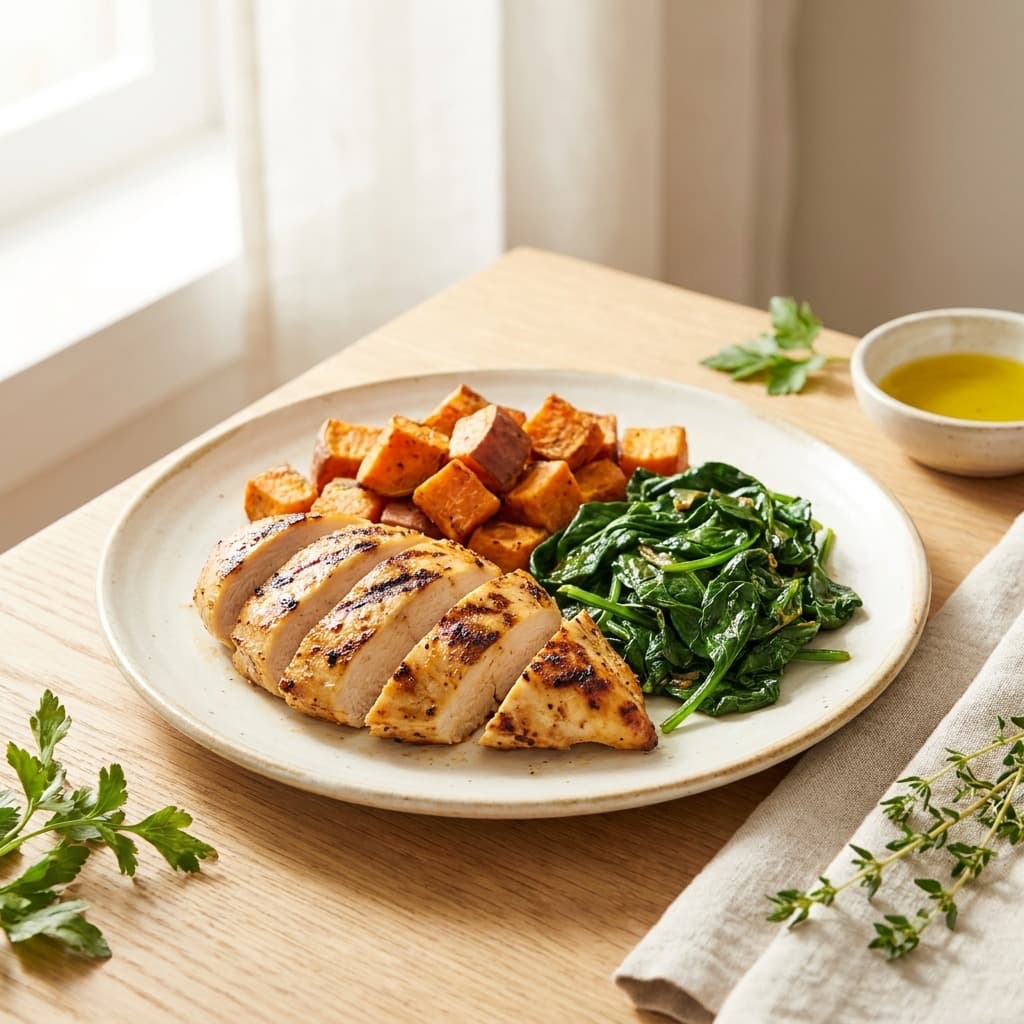
Grilled chicken, sweet potato, and spinach
~35g proteinThe template plate: lean protein, a fist of slow carbs, greens wilted in the same pan. Mild flavors that survive medication-day food aversions, which is exactly when you need dinner to not be a negotiation.
Make it easier: Microwave the sweet potato 6 minutes instead of roasting 45. Cook two chicken breasts; tomorrow's lunch is done.
Swap it: Pork tenderloin or tofu for the chicken; quinoa or a slice of good bread for the sweet potato.
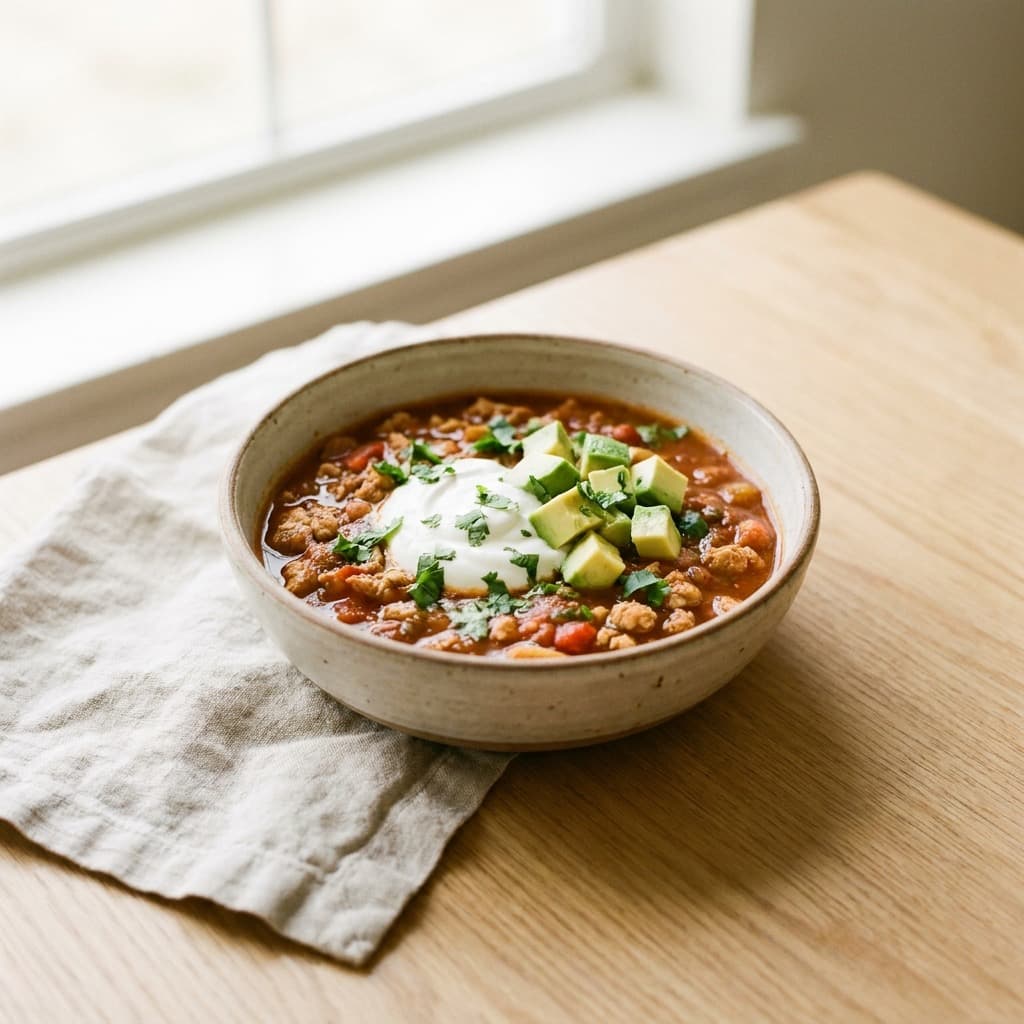
Turkey chili with Greek yogurt
~30g per bowlBeans plus ground turkey is a protein-and-fiber double hit, and a warm bowl goes down easier than a plate when appetite is low. The yogurt dollop adds protein where sour cream adds nothing.
Make it easier: Canned beans, canned tomatoes, one packet of chili seasoning: 25 minutes in one pot. Freeze half in single portions the same night.
Swap it: Lentils for a meatless version, lean ground beef if turkey reads as bland to you.
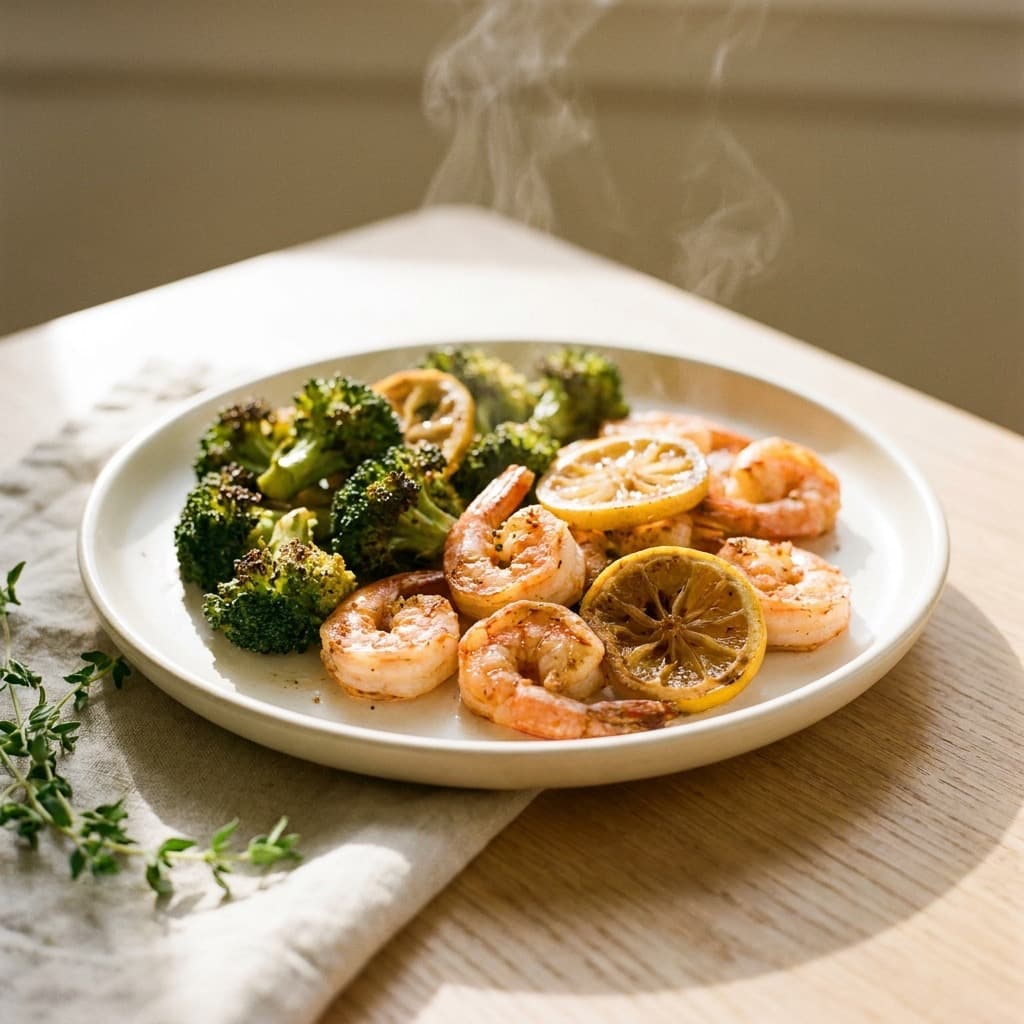
Sheet-pan lemon shrimp and broccoli
~28g proteinFifteen minutes start to finish, and shrimp is the highest protein-per-bite food in the store, which matters enormously when you only have a few bites of interest to spend.
Make it easier: Keep a bag of frozen shrimp in the freezer permanently; it thaws in 10 minutes under cold water. This is the fastest real dinner you can own.
Swap it: Scallops, or strips of chicken breast with 5 extra minutes.
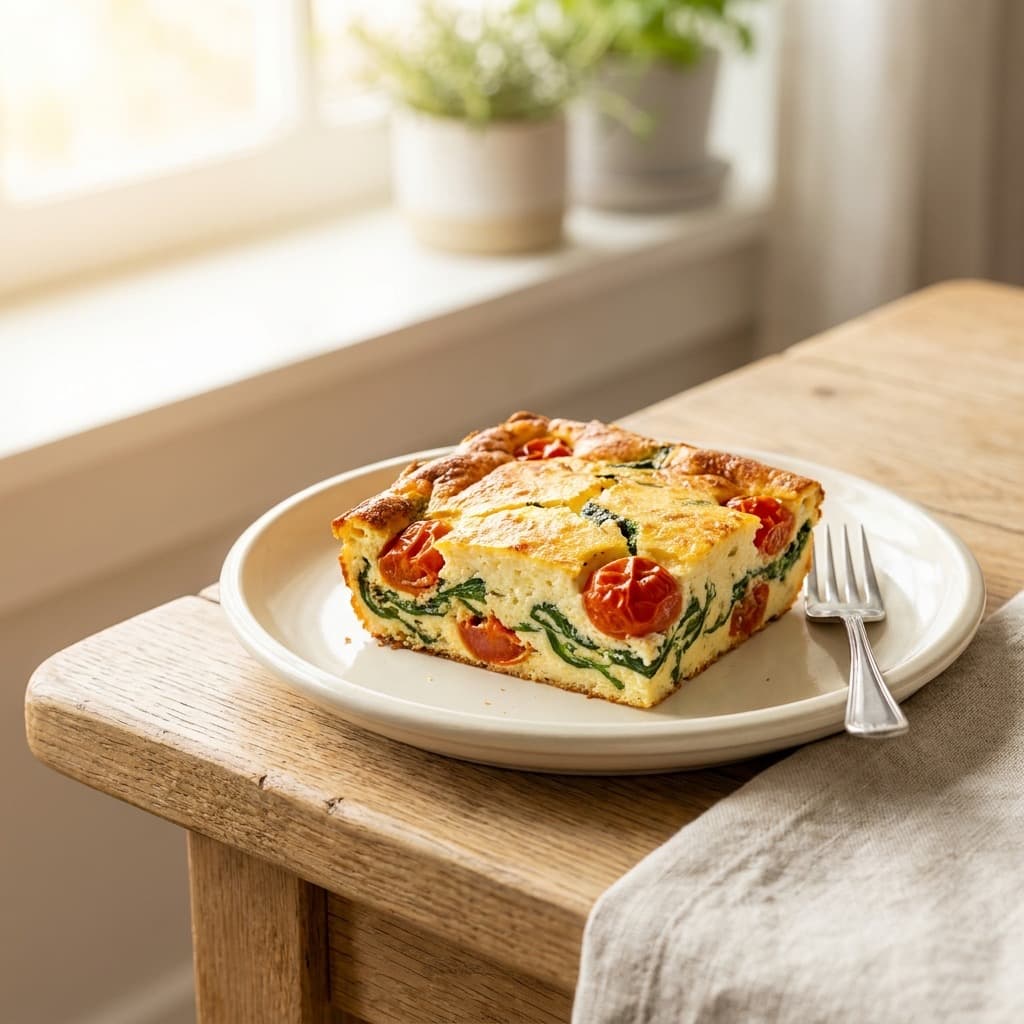
Cottage cheese egg bake
~26g per sliceEggs and cottage cheese baked with spinach and tomatoes. Breakfast-for-dinner is a legitimate GLP-1 strategy: eggs stay appealing when almost nothing else does, and a slice is naturally portion-sized.
Make it easier: Bake it in a muffin tin instead of a dish: twelve grab-and-go portions, 20 minutes instead of 40.
Swap it: Any vegetables alive in the drawer; feta for the cottage cheese if you want it saltier.
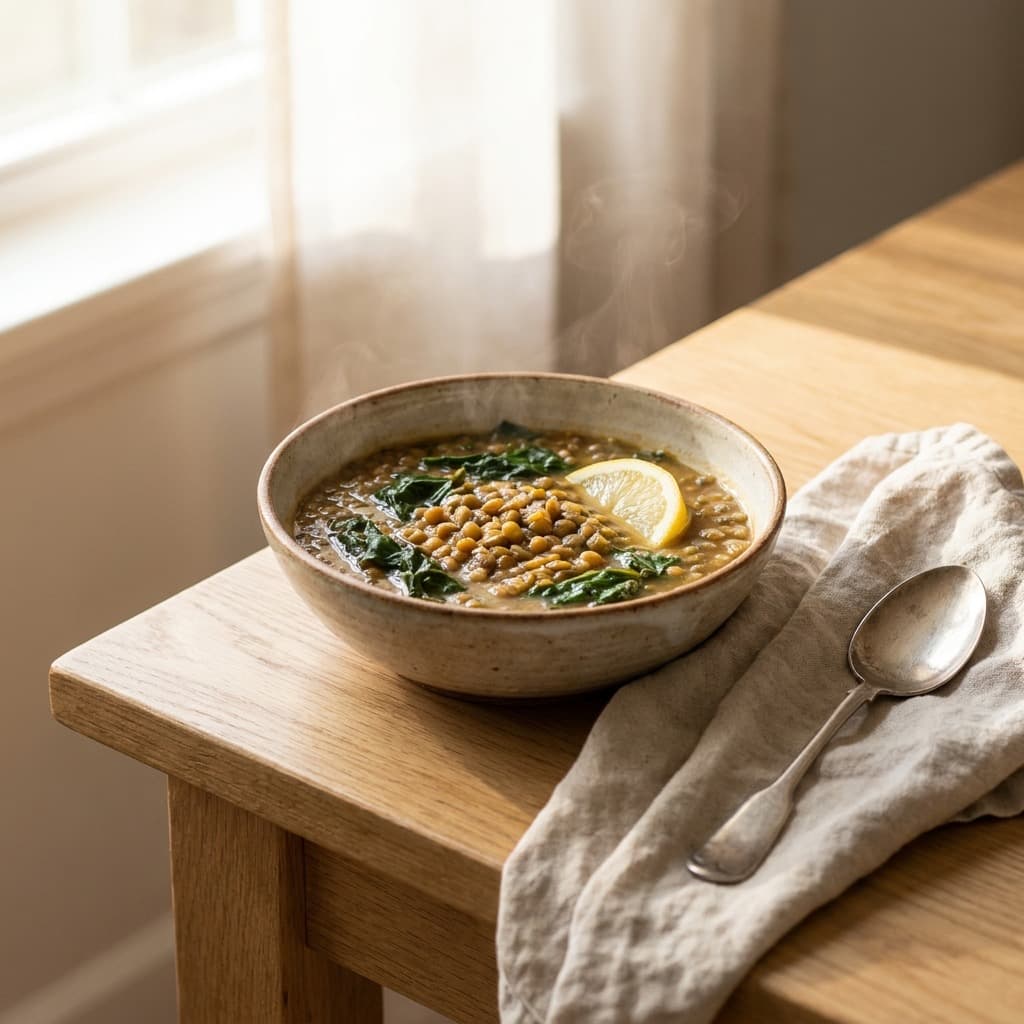
Lentil soup with greens
~20g per bowl, plus serious fiberThe mechanical-fullness special: lentils carry more fiber per bowl than almost anything else you can cook, and warm liquid meals stay welcome on days when solid food does not.
Make it easier: Canned lentils cut it to 15 minutes. A lemon squeeze at the end matters more than it should; brightness helps when flavors read as flat.
Swap it: White bean and kale soup runs the same play with the same numbers.
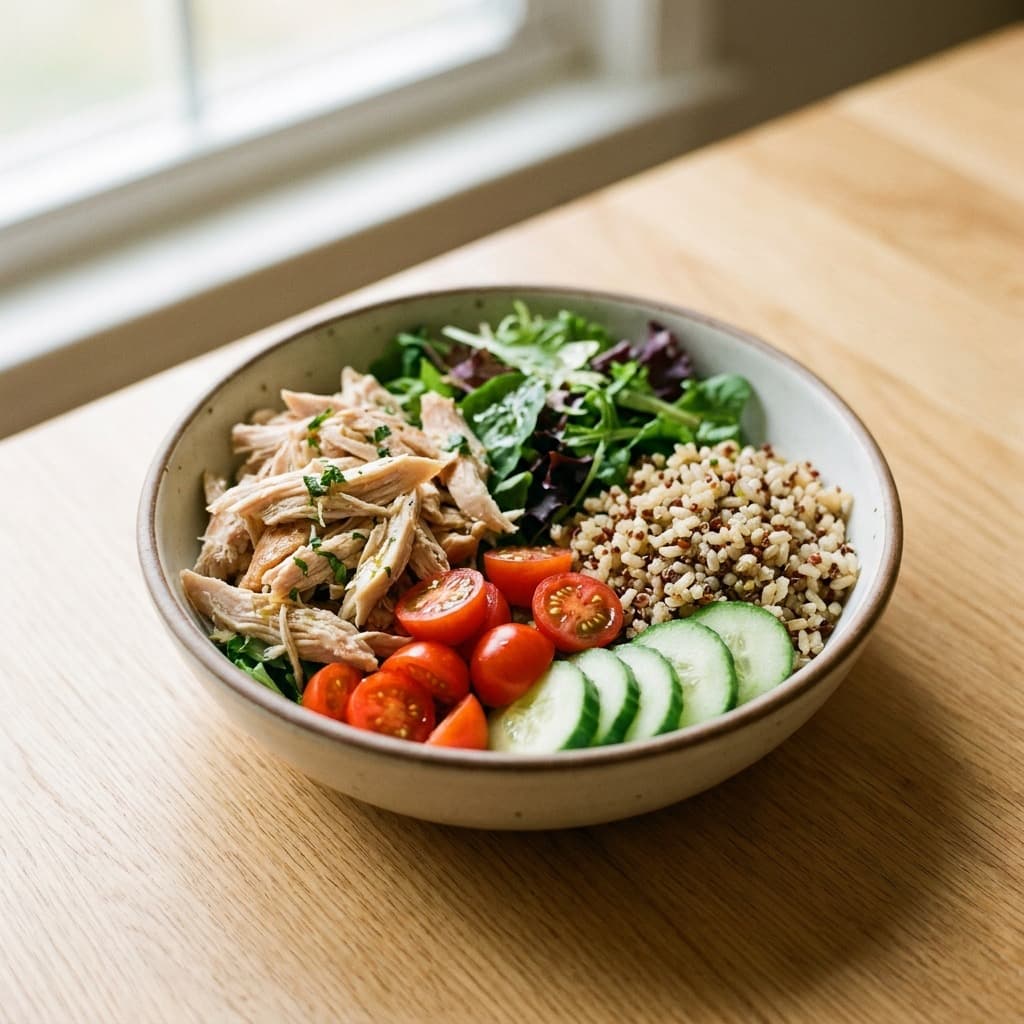
Rotisserie chicken bowl
~30g proteinThe no-cook safety net. Store rotisserie chicken over bagged greens or microwave grains with whatever vegetables are around. The best dinner is the one that happens; this one requires nothing from you but assembly.
Make it easier: Buy the chicken on grocery day, strip it into a container immediately, and it becomes three dinners and two lunches of zero-effort protein.
Swap it: Canned tuna or salmon, deli turkey, or yesterday's anything.
When even these sound like too much
Some nights, especially dose days, nothing on any list will sound good. Do not force a dinner; downshift it. A Greek yogurt with berries, a protein shake, two boiled eggs, a cup of the frozen chili: any protein landing beats a perfect dinner skipped. And if the aversion runs multiple days and eating protein at all becomes a fight, that is a conversation for your prescriber, not a willpower project.
One more honest note: hitting protein at dinner is much easier if dinner is not doing all the work alone. Front-loading earlier in the day, starting with a 30g breakfast, takes the pressure off the evening entirely, and quiets the 4pm food noise window as a side effect. To see these dinners slotted into a complete week, use the 7-day meal plan. You can check your personal protein target with the protein calculator.