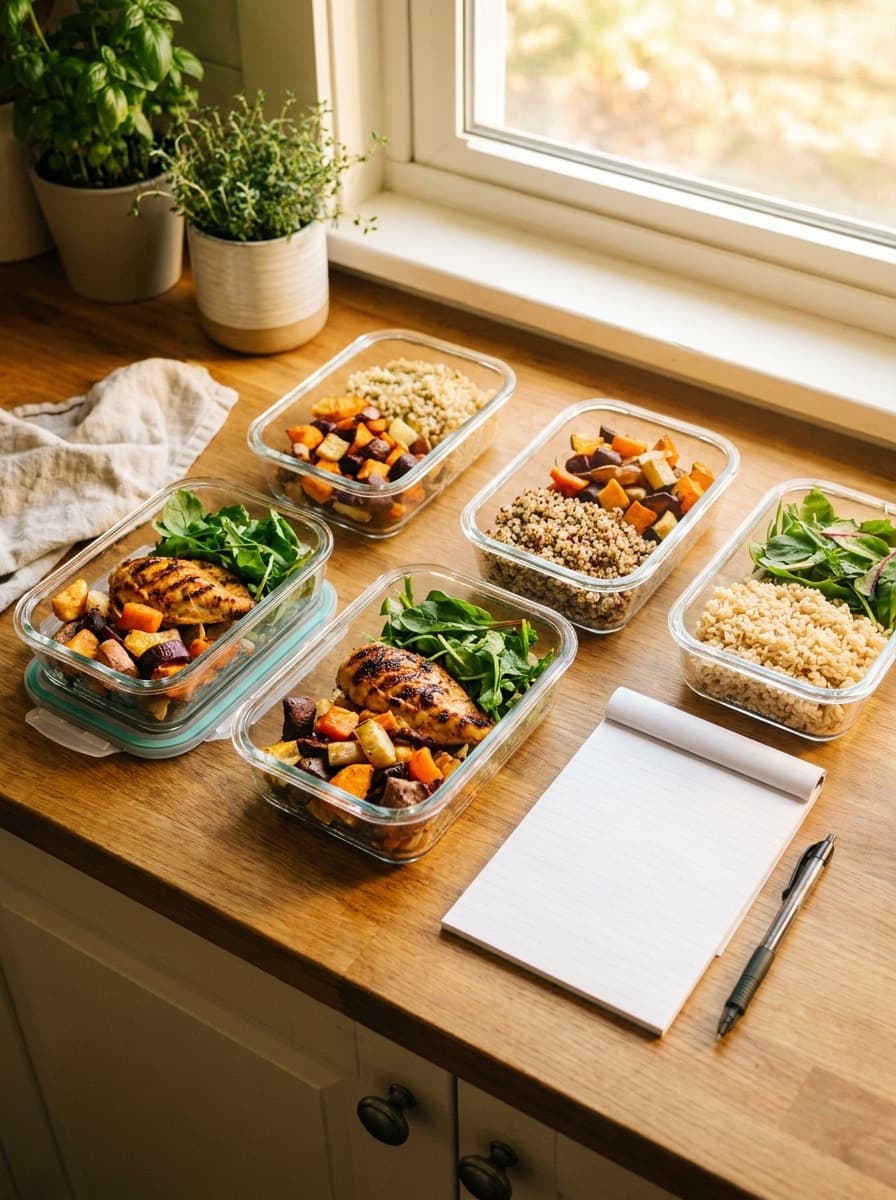
Prep is protein insurance
On a GLP-1, the risk is not eating too much at lunch. It is a suppressed appetite meeting an empty fridge and settling for crackers, and the day quietly finishing 40g short of protein. Meal prep on these medications has one real job: make the protein-forward option the zero-effort option for every meal where appetite might not show up.
The classic bodybuilder version, ten identical chicken-and-rice bricks, fails here for an obvious reason: the portions are wrong and the monotony is brutal when food barely appeals in the first place. The GLP-1 version is smaller, more modular, and assumes your appetite will swing during the week.
The one-hour Sunday session
- Minutes 0 to 10: protein in the oven. A tray of chicken thighs, or salmon portions, seasoned simply, mild flavors survive medication-day aversions. If you want a second protein in the bank, a cottage cheese egg bake shares the oven.
- Minutes 10 to 20: vegetable tray on the second rack. Broccoli, carrots, brussels sprouts, whatever is alive in the drawer. Oil, salt, done. This is the fiber-volume half of every plate this week.
- Minutes 20 to 30: grain pot and egg pot. Rice or quinoa on one burner, six boiling eggs on another. The eggs are the snack bank for the 4pm window.
- Minutes 40 to 55: portion SMALL. Five half-size containers: protein anchor, vegetable volume, small grain scoop. A finished small container beats an abandoned big one, every single time.
- Minutes 55 to 60: freeze half. Two or three containers go straight to the freezer. Not the fridge. This is the rule that ends food waste.
The freeze-half rule, because your appetite is not a constant: dose days can erase hunger; the weeks after a taper step can multiply it. Freezing half of everything the day you cook converts every misjudged week from wasted food into a free week later. Glass single-portion containers make it a zero-thought system.
The exact shopping-and-cooking math
For one person, one week, this is the whole list the session needs:
- Protein tray: about 2 lbs of chicken thighs (or 4 salmon portions). Yields the anchor for 5 lunches with dinner leftovers to spare.
- Egg bake: 8 eggs + 1 cup cottage cheese + a bag of spinach + cherry tomatoes in one baking dish. Yields 6 slices: breakfasts, plus the emergency dinner.
- Vegetable tray: two heads of broccoli, a bag of carrots, a pint of brussels sprouts. Yields the fiber half of every plate.
- One pot: 1.5 cups dry quinoa or rice. Yields the small scoop that rounds out five containers.
- Snack bank: 6 boiled eggs, yogurt singles, a bag of pre-cut vegetables for the 4pm list.
Container math: five half-size lunch containers, two or three of them straight to the freezer, one egg bake dish, one jar of boiled eggs. That is the entire physical footprint of a week that never asks "what should I eat" at a weak moment.
Shot week vs off week
If you inject weekly, your appetite has a shape: lowest right after the dose, climbing toward the end of the cycle. Prep for the shape, not the average. For the low days: soups, egg bake slices, yogurt, a smoothie bag ready to blend. For the climb, and especially if you are tapering down or past your last dose, load the volume side: bigger vegetable portions, lentil soup, the high-volume dinners that fill you mechanically when the chemical fullness is fading. The same hour of prep serves both states if you portion for them on purpose.
The assembly menu
Four prepped components turn into a different lunch every day without new cooking: protein over greens with the roasted vegetables; a wrap with the chicken and hummus; the grain bowl with an egg on top; chili from the freezer on the cold day; the egg bake slice on the day nothing sounds good. Variety lives in assembly, not in cooking five recipes, and ten minutes of Sunday planning beats five weeknights of negotiation. For the fully mapped week this session feeds, see the 7-day meal plan.